

The Ultimate Guide to Drum Handling Equipment: Types, Benefits & Buying Tips
April 29, 2026
What should Indian industrial buyers look for when choosing drum handling equipment?
If your plant moves steel or plastic drums every day, you already know that a small mistake can cost time, money, and sometimes health. The right drum handling equipment keeps your people safe, speeds up loading, and protects your product. This simple guide will walk you through the main options, what to check before buying, and how to get the best value in Indian conditions.
Instead of relying on manual lifting or makeshift trolleys, a planned drum handling system turns a risky job into a smooth, repeatable process. You can match tools to your operation, whether you run a small chemical unit in Gujarat or a multi-plant food business across India.
Think of it as building a long-term asset. You invest once in reliable industrial drum handlers and enjoy fewer injuries, fewer spills, and faster material movement year after year.
Why invest in drum handling equipment?
1. Safety and compliance
Heavy drums can easily cross 200 kg when full. Manual lifting strains backs, shoulders, and knees. With proper drum lifting equipment, workers guide the load instead of carrying it. This reduces accidents and helps you meet Indian safety norms and global standards followed by export-focused plants.
In sectors like pharmaceuticals, speciality chemicals, FMCG, and food processing, drum handling is also closely linked to compliance with Pollution Control Board guidelines, factory inspectorate requirements, and customer audits. The right equipment supports safer hazardous material handling, proper segregation of flammable drums, and easier implementation of lockout–tagout (LOTO) and material traceability practices.
2. Higher efficiency and throughput
Drum lifters, drum trucks, and forklift drum handlers cut handling time sharply. One operator can move more drums per hour with less fatigue. This shortens loading and unloading cycles and keeps your production lines running steadily.
3PL warehouses, contract manufacturers, and export units often see the biggest gains: smoother drum flow between receiving, decanting, production, and dispatch reduces bottlenecks and makes shift planning easier.
3. Product and asset protection
Spills, leaks, and dents waste product and damage floors and storage racks. Quality barrel handling equipment holds each drum securely and keeps it upright or at a controlled tilt. This protects both your inventory and your warehouse infrastructure.
In temperature-sensitive or contamination-sensitive applications, minimising manual contact with drums also supports better hygiene, cleaner filling areas, and lower risk of cross-contamination between batches.
Main types of drum handling solutions
1. Drum lifters, carts, and drum trucks
These are compact, often manual tools designed for short-distance movement.
- Drum trucks / dollies are two or four-wheeled trolleys that allow a single person to tilt and roll a drum safely.
- A drum trolley with brakes is useful on slightly sloped floors or loading docks, as it prevents unwanted rolling.
- Simple steel drum lifter frames can clamp the rim so the operator only balances and steers the drum, not its full weight.
These tools are ideal for smaller units, tight aisles, and plants where drums travel only short distances between storage and process areas.
For very small workshops or start-ups, these basic lifters and trucks are often the first step away from manual handling. As volumes grow, the same equipment can continue to serve in secondary areas like QA labs, premix rooms, or rework zones.
2. Drum rotators and turners
Sometimes you do not just move drums, you also need to mix or empty them.
- Drum rotators / drum turners allow you to spin drums to blend contents without opening them fully, which is valuable for paints, chemicals, and food ingredients.
- Cradle-style tilters help pour liquids into smaller containers at a controlled speed.
Rotators can be manual, electric, or hydraulic. For flammable or sensitive products, check for explosion-safe options and sealed motors.
In addition to safety, drum rotators can improve batch consistency by ensuring solids and liquids are properly mixed before decanting into process vessels. This is especially useful where raw materials settle during long storage or transport.
3. Drum trolleys, dollies, and stackers
Drum dollies are simple circular platforms with wheels. They keep drums mobile inside a storage area. Drum stackers go a step further and allow vertical stacking of drums in racking systems or on pallets.
For Indian warehouses with limited floor space, a drum stacker can free valuable area, especially when combined with good racking design similar to what you see in modern warehouse shelving systems.
When planning a new facility or expanding an existing one, consider drum stackers and dollies as part of your overall material flow design. This helps you position decanting stations, QC sampling areas, and finished goods storage in a way that minimises double-handling of drums.
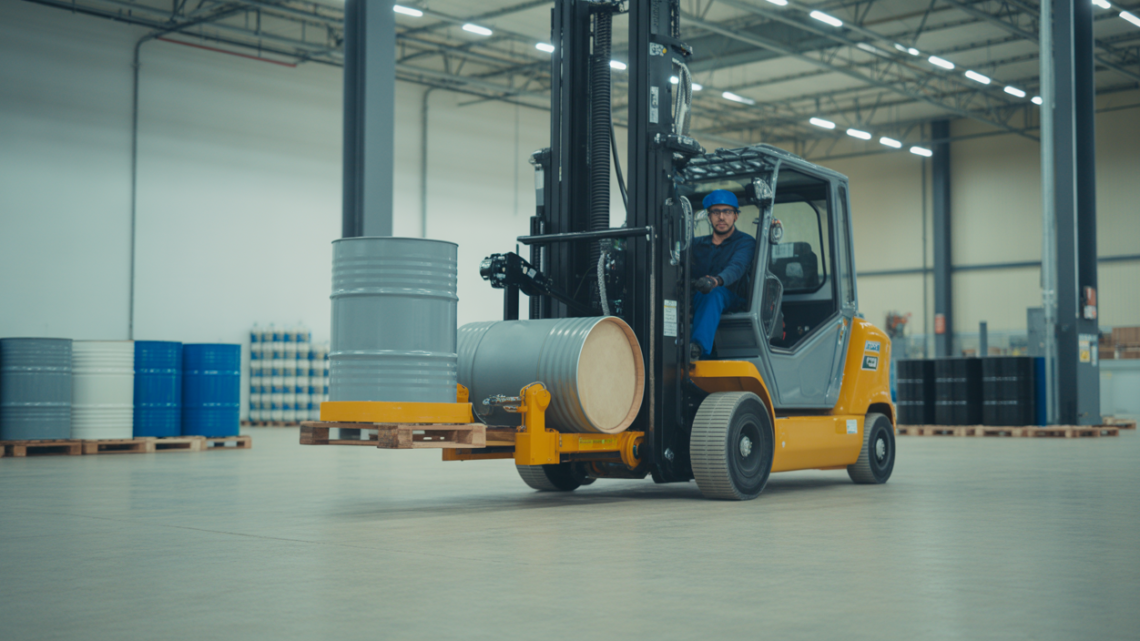
4. Forklift drum attachments
If your plant already uses forklifts, adding a forklift drum handler can be very cost-effective.
- Barrel clamp forklift attachments grip one or more drums securely from the side.
- Drum rotator attachments let the forklift lift, tilt, and pour from drums at height.
Make sure the attachment matches your forklift capacity and mast type. Always check the combined weight of forklift, attachment, and loaded drums.
In outdoor yards, tank-farm areas, or where drums are loaded directly into containers and trucks, forklift attachments reduce the need for separate equipment and save turnaround time for vehicles.
5. Automated drum handling systems
High-volume plants may opt for semi-automatic or fully automatic systems. These can integrate powered conveyors, automated clamps, and sensors that guide drums from unloading to filling and storage.
Upfront cost is higher, but in busy facilities the payback can be rapid due to labour savings and very low damage rates.
Such systems are especially relevant for large chemical complexes, lubricant blending plants, or multi-line FMCG factories where hundreds of drums move per shift and management wants predictable, audit-ready handling processes.
How to choose the right equipment for your plant
1. Define drum type and capacity
List the drum sizes you handle: 200-litre steel, plastic, fibre, or a mix. Note average and maximum weights. Choose tools that safely exceed this maximum. For mixed materials, look for adjustable clamps that can handle both steel and plastic without slipping.
Also consider whether you handle open-top vs closed-head drums, UN-certified drums for hazardous goods, or specialised liners. These details can influence which clamping mechanisms and rotators are suitable.
2. Study your layout and floor conditions
Measure aisle widths, ramp slopes, and door heights. Narrow passages may rule out certain drum trucks or stackers. Rough floors may demand larger wheels or pneumatic tyres to move smoothly.
Think about where drums enter and exit your premises, any mezzanine storage, and whether you plan to integrate drum handling with pallet conveyors, dock levellers, or weighbridges in the future.
3. Decide on manual vs powered
For low volume and short distances, manual gear is often enough. For frequent handling, long routes, or heavy drums, powered lifters or electric stackers reduce fatigue and speed up work. Check local power availability and charging space for battery units.
Many Indian buyers start with manual models and upgrade to powered versions as volumes grow. When possible, choose vendors whose product ranges allow future upgrades or add-ons without completely replacing your existing fleet.
4. Check build quality and maintenance needs
Look for strong welds, rust-resistant coatings, and easily available spare parts. Ask vendors about service support in your region. A simple daily inspection checklist, like those used in other industrial maintenance routines, keeps your equipment reliable.
Whenever possible, choose reputed Indian or global brands that provide clear manuals, training support, and quick access to consumables such as wheels, seals, and hydraulic oil.
Safety and best practices for Indian operations
- Train every operator on correct posture, safe speeds, and parking positions.
- Use spill containment pallets or trays wherever chemicals or oils are stored.
- Mark drum paths clearly on the floor to avoid collisions with pedestrians.
- Inspect clamps, wheels, and brakes at the start of each shift.
Aligning your safety practices with international standards not only protects people but also builds a stronger image with global customers and auditors.
Wherever flammable or toxic materials are involved, combine good equipment with PPE, proper ventilation, emergency showers, eye-wash stations, and clear SOPs for spill response and drum leak management.
Cost, ROI, and budgeting tips
Instead of only looking at purchase price, calculate total cost of ownership.
- Estimate time saved per drum movement after introducing proper equipment.
- Put a value on reduced injury risk and less downtime.
- Include expected life of the equipment and cost of basic spares.
Many Indian investors find that upgrading their drum handling setup pays for itself in one to three years through labour savings and fewer incidents.
While preparing budgets, also factor in training, periodic maintenance, and any accessories like spill pallets, ramps, or dock equipment that will help you get the full benefit from your drum handling investment.
Keeping your drum handling equipment in top shape
A small, regular routine keeps your system running smoothly.
- Daily: Visual check for cracks, loose bolts, oil leaks, and tyre condition.
- Weekly: Test brakes, clamps, and lifting mechanisms under load.
- Quarterly: Lubricate moving parts, review usage patterns, and replace worn parts.
Record these checks in a simple logbook. It builds a track record that auditors and insurance companies appreciate.
Whenever you modify processes—such as changing drum sizes, increasing shift counts, or adding new storage areas—review whether your existing equipment is still adequate and safe for the new conditions.
FAQs
Q1. What is the safest way to move heavy drums in a small Indian factory?
The safest method is to use a properly rated drum truck, trolley, or lifter that matches your drum size and weight. Train one or two dedicated operators, keep paths clear, and always use brakes or wheel chocks on slopes. Avoid manual lifting or dragging, even for short distances.
Q2. How do I decide between a forklift drum attachment and standalone equipment?
If you already operate forklifts and have enough trained drivers, a forklift attachment can be very efficient for long distances and outdoor movement. For tight indoor spaces, short moves, or where forklifts are not allowed, standalone drum lifters, stackers, or trolleys offer more flexibility. Many plants use a mix of both to cover different zones.
Q3. How often should drum handling tools be inspected?
A quick visual check should happen daily before use, with a more detailed inspection at least once a week. If you run multiple shifts or handle hazardous materials, consider monthly reviews by your safety officer or maintenance team.

Patricia Duarte was born in Sacramento, California Studied at University of San Francisco. Currently working as Author at Myfitv, Patricia Duarte helps readers learn the field of Marketing, Health, Education, Construction, Business etc hone their skills, and find their unique voice so they can stand out from the crowd.